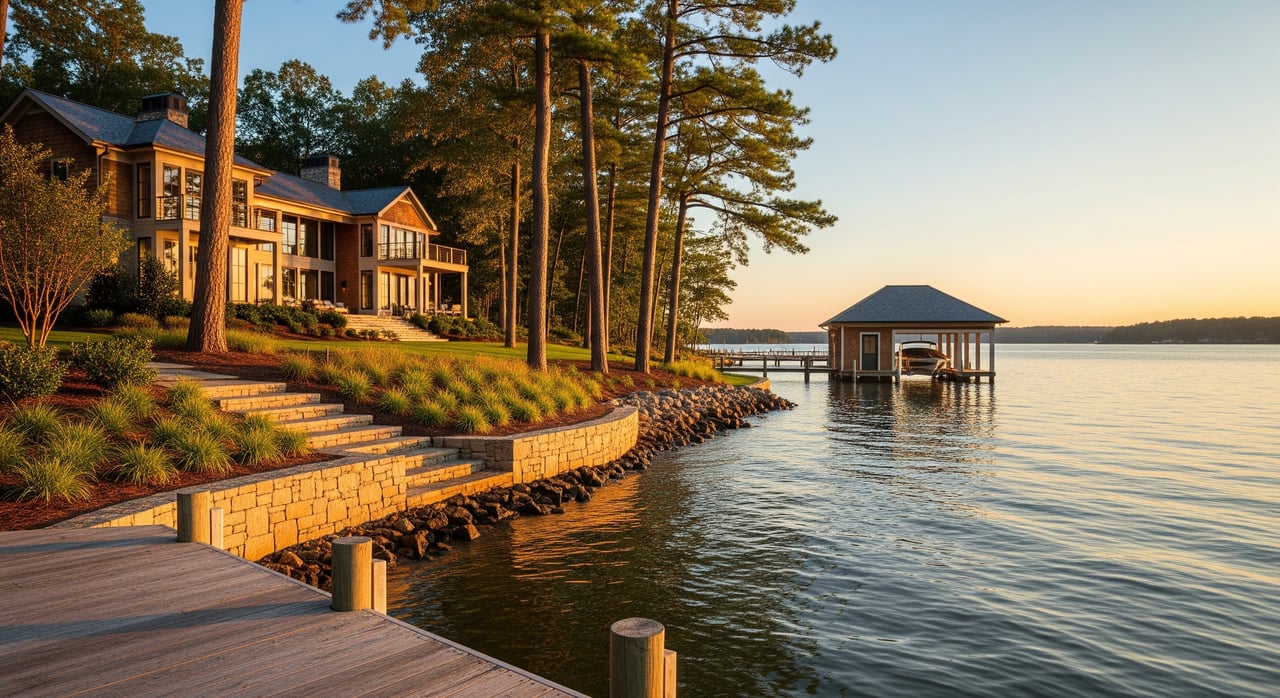
You fell in love with the water, the sunsets, and the idea of walking out to your own dock. Before you fall for a property, make sure the shoreline rules support your vision. On Lake Norman, Duke Energy manages what you can build, clear, or change along the water’s edge, and those rules can shape your experience as a waterfront owner in Davidson.
This guide explains the essentials in plain language so you can spot red flags early, confirm what is allowed on a specific lot, and plan your purchase with confidence. You will learn how dock permits work, what clearing is allowed, why surveys matter, and which documents to request during due diligence. Let’s dive in.
Key rules to know on Lake Norman
Lake Norman is a Duke Energy reservoir. Duke Energy runs a Shoreline Management Program that regulates how private owners use areas along the lake. Owning waterfront land does not grant unlimited rights to build or alter the shoreline. Most docks, boat lifts, and shoreline work require Duke authorization, and some activities are limited or prohibited based on shoreline classification.
The rules protect safety, water access, and environmental health. They also help Duke manage reservoir operations and flood control. In practice, this means you should treat the shoreline as a regulated zone and verify approvals for any existing or planned improvements.
Docks and boat structures: permits
Verify existing dock status
- Ask the seller for copies of any Duke shoreline license, permit drawings, and recent correspondence.
- Confirm with Duke whether the license is current, in good standing, and transferable to you. Transfer procedures and fees vary.
- Compare what is built to what was approved. If a dock’s size, slip count, or location differs from the permit, Duke may require changes or removal.
Know what you can build
- New docks, boat lifts, gangways, and boathouses typically require Duke authorization. Size, length, and slip counts are not unlimited.
- Design standards may address materials, buoyancy, and clearances from navigation channels and adjacent docks.
- If you want to expand an existing dock, treat it like a new application. Duke may limit expansions based on shoreline classification and spacing from neighbors.
Local and state permits
- Local permits may apply for structural or electrical work. Check with the Town of Davidson and Mecklenburg County for building and zoning requirements.
- State or federal permits can be triggered by dredging, fill, or work affecting wetlands. Contact the North Carolina Department of Environmental Quality and, when applicable, the U.S. Army Corps of Engineers for guidance before you plan major shoreline changes.
Vegetation and views: what is allowed
Vegetation along the shoreline plays a major role in stabilizing banks and protecting habitat. Wholesale clearing to the water is commonly restricted.
Many programs allow a limited “view corridor” or footpath to the water. Widths are typically constrained, and native vegetation outside the corridor should remain intact or be restored. If prior owners cleared more than allowed, you may inherit restoration duties.
Shoreline stabilization such as riprap, retaining walls, or grading often needs review and approval. Biofriendly stabilization and native plantings are often preferred over hard bulkheads. Always confirm what is allowed on the specific lot before hiring a contractor.
Boundaries and setbacks
Your deed line may not match Duke’s shoreline boundary. Duke often manages land to a mapped boundary that sits landward of the normal pool. Licensing decisions use that boundary and the reservoir’s normal pool elevation to define where private structures can encroach.
To protect your investment, order a recent boundary survey that shows:
- Property lines and measured distances to the shoreline.
- The location of any dock or boathouse relative to property lines.
- Duke’s shoreline boundary, if available, so you know where Duke’s jurisdiction begins.
Local setbacks from the Town of Davidson or Mecklenburg County can also apply to structures landward of Duke’s boundary. Get clarity early to avoid design changes later.
Maintenance and liability
If you benefit from a private dock or boathouse, you are generally responsible for its safe condition, ongoing maintenance, and any required removal. Duke can inspect and order repairs for unsafe or unpermitted structures. If a structure is removed by Duke due to noncompliance, costs can be charged to the owner.
Lenders and title companies may ask for proof of a valid license and compliance. Many owners carry liability insurance that covers docks or boathouses. Ask your insurance provider how dock condition and permits affect coverage.
Violations and enforcement
Unpermitted docks, unauthorized clearing, or unapproved shoreline stabilization can trigger notices, fines, mandated restoration, or removal. Emergency repairs may receive temporary allowances, but permanent changes usually need full review and authorization. If something looks off, pause and confirm with Duke before you proceed.
Transfers and records
Licenses for docks and shoreline encroachments often can be transferred to a new owner, but not always. Most transfers require an application and fee, and some licenses carry conditions. Request the property’s Duke shoreline file early. This file can show permits, drawings, any violations, shoreline classification, and correspondence.
Securing the file during due diligence helps you avoid surprises, confirm transferability, and plan any corrective work or upgrades with accurate timelines.
Buyer due diligence checklist
Use this checklist as soon as you get serious about a waterfront property in Davidson:
Seller documents
- Duke shoreline license and drawings.
- Any transfer instructions or recent letters from Duke.
- HOA rules and CC&Rs that affect docks or shore access.
- Repair records and structural inspections for the dock or boathouse.
Survey and boundaries
- A recent boundary survey showing property lines, the shoreline, and all water-related structures.
- A survey or map that shows Duke’s certified shoreline boundary, if available.
Duke Energy records
- Ask Duke Energy Shoreline Management for the encroachment file for the parcel.
- Confirm the dock is licensed, transferable, and in compliance. Note any outstanding issues.
Local, state, and federal permits
- Check Town of Davidson and Mecklenburg County for building and zoning requirements.
- For major shoreline work or large dock projects, contact NCDEQ and the U.S. Army Corps of Engineers to identify permits.
Condition and compliance
- Hire a qualified marine contractor or structural inspector to assess dock safety and materials.
- Ask whether prior vegetation clearing or stabilization was authorized. Look for restoration orders or notices of violation.
Insurance and lending
- Confirm lender documentation needs, especially for properties with older or unpermitted docks.
- Ask your insurance carrier about coverage for docks and any conditions they require.
Future plans
- If you plan to add or enlarge a dock, request feasibility feedback from Duke before you commit. Get guidance in writing when possible.
Timing tip: Permit transfers and file requests can take weeks. Start immediately during due diligence so you have time to adjust, negotiate repairs, or budget for upgrades.
Timelines and costs
Expect routine license transfers and standard reviews to take several weeks, depending on processing volume. New docks or significant modifications that need engineering review or environmental permits can take several weeks to a few months. Complex projects that involve state or federal agencies can take longer.
Fees vary by reservoir and by project scope. Plan for Duke’s application and license fees, local permit fees, and contractor costs. Ask each agency for current fee schedules and processing times before you set closing dates or construction timelines.
Practical steps for Davidson buyers
- Start with documents. Obtain the Duke license, the Duke shoreline file, and a recent survey that shows the dock relative to property lines and the shoreline boundary.
- Inspect early. Have a marine contractor evaluate structural safety and compliance against the approved drawings.
- Coordinate with authorities. Check local building and zoning requirements and contact state or federal agencies if work could affect wetlands or require dredging.
- Align plans with rules. If your lifestyle vision depends on a larger dock, a covered slip, or shoreline enhancements, verify what is feasible on that specific lot before you finalize the deal.
Work with a local advisor
Waterfront purchases on Lake Norman reward good preparation. The best deals align your lifestyle goals with the shoreline rules, permit timelines, and maintenance responsibilities. With careful due diligence, you can close with confidence and enjoy the lake without surprises.
If you want a seasoned, concierge-level guide on Davidson waterfronts, reach out to Luxe Realty Group. We will help you gather the right files, interpret permits, and line up trusted local contractors so your lake life starts smoothly.
FAQs
What shoreline rules affect Davidson waterfront homes on Lake Norman?
- Duke Energy’s Shoreline Management Program governs docks, vegetation, and shoreline work, and local, state, and federal permits can also apply to specific projects.
How do I confirm a dock is properly permitted before buying?
- Request the Duke license and drawings from the seller, ask Duke for the property’s shoreline file, and compare built conditions to approved plans.
Can I expand or cover an existing dock after closing?
- Possibly, but expansions usually require Duke review and may be limited by shoreline classification, spacing, and safety standards, plus local permits.
What are the rules for clearing trees to improve lake views?
- Wholesale clearing is commonly restricted; limited view corridors may be allowed, and unauthorized clearing can trigger restoration requirements.
Who handles dock maintenance and liability once I own the home?
- You are typically responsible for safe upkeep, repairs, and removal if ordered, and many owners carry liability insurance that covers the dock.
What happens if a dock or shoreline work was done without approval?
- Duke can require retroactive permitting, modifications, fines, restoration, or removal, and unresolved violations can delay financing or closing.