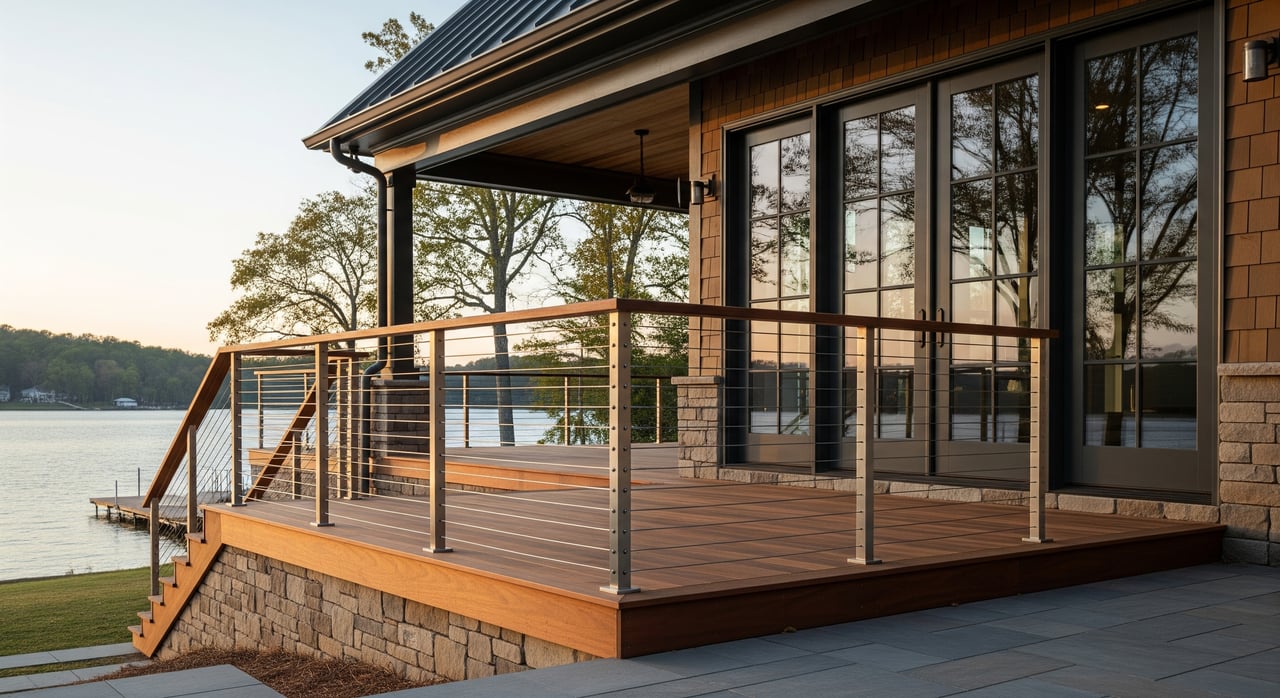
Love the water but worry about what it does to a house? If you live in Davidson or you’re eyeing a place on Lake Norman, you’re smart to think about materials that handle humidity, splash, and the occasional flood. The right choices save you time, protect value, and help you stay on the right side of local rules. This guide breaks down waterfront-friendly picks for exteriors, decks and docks, interiors, and shoreline, plus permits you need to know. Let’s dive in.
Know the local rules first
Permits for docks, dredging, and many shoreline projects on Lake Norman run through Duke Energy Lake Services. Before you plan upgrades or replace decking, review the lake use permit process and what is allowed at your shoreline type. You can start with the overview on Duke’s page for permits and shoreline activities.
Mecklenburg County enforces watershed buffer rules along Lake Norman measured from the full pool elevation of 760 feet. Buffers limit built-upon area, grading, and tree removal near the water, and many changes require approval. Read the county’s watershed buffer guidelines before you design hardscaping or shoreline work.
For any space that could flood, materials below the Base or Design Flood Elevation must be flood-damage resistant. FEMA’s TB-2 is the standard that defines what qualifies and how to use it. If you are finishing a ground-level room, garage, or crawlspace, review FEMA’s Technical Bulletins page and confirm details with your local floodplain official.
Permits at a glance
- Check Duke Energy Lake Services for dock and shoreline approvals.
- Confirm county buffer limits before grading, paving, or removing trees.
- Use FEMA TB-2 flood-damage resistant materials below flood elevations.
Best exterior materials for Lake Norman
Siding that resists moisture
Fiber-cement siding and masonry veneer are top choices near the water. They resist rot, insects, and repeated wetting, and they perform well in our humid subtropical climate. For a technical overview of durable siding options, see PNNL’s guide to moisture and pest-resistant exterior siding.
Vinyl siding can work if the drainage plane and flashing are done correctly. Standard wood siding needs more care and is not ideal near splash zones or below flood elevations. If you love the look of wood, limit it to well-protected areas and keep it above known flood levels.
Roofs that last in humidity
Metal roofing offers long life, great water shedding, and low maintenance when installed with quality coatings and underlayment. Architectural asphalt shingles are also a solid option if you choose algae-resistant products and ensure good attic ventilation. For a simple comparison, review The Spruce’s overview of metal roofs vs. shingles.
Windows and doors near the water
For areas at or below flood elevations, use flood-resistant frames and avoid materials that swell or trap moisture. Where wind exposure is higher on open coves, consider impact-rated glazing for added protection. The WBDG summary on flood-resistant building envelopes is a helpful resource when you plan openings and thresholds.
Decks and docks: what works
Backyard decks that keep their look
Capped composite or solid PVC deck boards hold up well to frequent wetting and need less upkeep than untreated wood. Dense tropical hardwoods like ipe are also durable, though they require periodic oiling if you want to preserve the original color. For a quick rundown of decking types and care, see Better Homes & Gardens’ decking guide.
Marine-rated choices for docks
On the dock, choose products designed for splash and immersion. Use marine-rated composite or PVC for decking, pressure-treated or concrete piles for structure, and stainless or hot-dip galvanized hardware. Duke Energy permitting governs size, setbacks, and modifications, so review shoreline activities and permits early. For brand comparisons, this dock-focused overview of composite decking for docks is a practical starting point.
Foundations, structure, and fasteners
Build for wetting and quick recovery
Where possible, elevate living areas and keep flood-prone zones simple and easy to dry. Below the flood elevation, use FEMA TB-2 compliant materials and finishes that can handle inundation. When wood touches soil or water, make sure it is pressure-treated to the correct exposure rating and use corrosion-resistant connectors.
Hardware that fights corrosion
Freshwater is less aggressive than ocean spray, but repeated wet-dry cycles and treated wood can still corrode standard zinc-plated hardware. Specify 304 or 316 stainless steel or post-fabrication hot-dip galvanized connectors in exterior and splash zones. Regular inspections help you catch issues before they become costly.
Interiors below potential flood lines
Floors that dry fast
Avoid hardwood and standard carpet in areas that could flood. Instead, consider sealed concrete, ceramic or porcelain tile, or properly installed sheet vinyl. FEMA’s guidance on flood-damage resistant materials covers acceptable floor finishes and adhesives.
Walls and cabinetry that recover
Use cement board or non-paper-faced gypsum where allowed, and choose moisture-resistant paints. Mount cabinets above projected flood levels and design bases or toe kicks to be removable. The Keep Safe Guide offers practical tips to floodproof your home with materials that clean up and dry out faster.
Shoreline and buffers: smart stabilization
Start with vegetation
Vegetated buffers and bioengineering protect banks, reduce erosion, and support water quality. Duke Energy’s program encourages habitat-friendly approaches; learn more about the Catawba-Wateree Habitat Enhancement effort here. These methods are often preferred during permitting.
When hard armor is needed
If conditions call for riprap or a seawall, you will need permits and specific details for stone size, toe treatment, and filter fabric. Many projects also require county or state approvals. Begin with Duke Energy’s shoreline permits overview to understand limits and documentation.
Maintenance for the Lake Norman climate
Stay ahead of termites
North Carolina has a high incidence of eastern subterranean termites. Keep wood away from soil, fix leaks fast, and schedule professional monitoring or treatments. NC State Extension’s guide to termite management outlines best practices for prevention.
Manage mold, mildew, and algae
Warm, humid summers promote growth on shaded surfaces. Use capped or non-porous deck finishes, maintain attic and crawlspace ventilation, and clean exterior surfaces routinely. For lake-wide algae updates and management efforts, follow regional notices like Charlotte Water’s information on Lyngbya management.
Annual checks that pay off
Walk your dock, deck, and shoreline each year to tighten hardware, replace worn boards, and touch up protective coatings. Clean composite and PVC decking to prevent slick algae films. Plan for periodic replacement of sacrificial components, such as dock decking and lift parts.
Quick material checklist
- Use fiber-cement or masonry as primary cladding.
- Choose metal roofing or algae-resistant architectural shingles.
- Install capped composite or PVC for decks and marine-rated options for docks.
- Specify stainless or hot-dip galvanized fasteners and connectors.
- Elevate mechanicals above flood levels and use closed-cell insulation where wetting is possible.
- Keep interiors below flood lines simple: tile, sealed concrete, and removable cabinet bases.
- Preserve a vegetated shoreline buffer and pursue bioengineering solutions first.
- Confirm Duke Energy and Mecklenburg permits before you start.
Ready to match the lake lifestyle with smart, durable choices? For neighborhood-level guidance and a smooth path from plan to permit to closing, connect with Luxe Realty Group.
FAQs
What makes a material “waterfront-friendly” in Davidson?
- It resists rot, mold, and corrosion, meets FEMA TB-2 if below flood elevations, and stands up to humid summers and frequent wetting common on Lake Norman.
Do I need a permit to build or modify a dock on Lake Norman?
- Yes. Duke Energy Lake Services oversees lake use permits, and some projects also require county or state approvals. Start with Duke’s page on permits and shoreline activities.
What decking holds up best on a dock that stays wet?
- Marine-rated composite or PVC decking with stainless or hot-dip galvanized fasteners performs well and reduces maintenance compared to untreated wood.
How do Mecklenburg County lake buffers affect my remodel?
- Buffers measured from the 760-foot full pool limit grading, paving, and tree removal near the water. Review the county’s watershed buffer guidelines and get approvals before work.
What flooring should I use in a flood-prone area?
- Choose sealed concrete, ceramic or porcelain tile, or correctly installed sheet vinyl. Avoid hardwood and standard carpet below flood elevations per FEMA TB-2 guidance.
How can I prevent termites in a lakefront home?
- Keep wood off soil, fix moisture issues quickly, use treated lumber where required, and schedule professional monitoring based on NC State Extension best practices.